
Hare-brained 80s MAGIC we all need more of NOW
from the man who dreamed bigger than all the others

I’m starting up a new Substack which is more directly related to business and brands and companies and less to personal stories – and then I realised, it’s all underpinned by stories and by all those who enthralled ‘child me’ to dream bigger.
So, here goes……thanks for following and supporting me here. I really appreciate every restack, like and comment and follow - more than you could know.
This is the true story of a hare that captivated a nation, including my family.
Once upon a true time, a beautifully painted hare captured the minds and imaginations of a generation of English children, parents, and grandparents alike. For a couple of years, this elusive hare had families and scholars alike enthralled, as they tried to decode the clues contained within the beautiful paintings of a magical book.
It turns out, this particular fairytale was real; it was beyond real, and turned out to be a publicist’s - indeed, a nation’s - dream come true. The book this mysterious hare lived in was ‘Masquerade’, and the author was artist Kit Williams. Kit devised complex riddles, with the clues contained hidden within his exceptionally detailed paintings. Perhaps the rose-tinted glasses back to childhood elevate this phenomenal book onto a pedestal sky high, where only the very best moments of our remembered childhoods can ever fly. For me, the magic and mystery of Masquerade occupies a place on that childhood pedestal. Strangely, until around 2014, I had not thought of Masquerade - REALLY thought about it, except in passing - for over 25 years.
Back to the early 80s: We’re sat around our kitchen table, after dinner, for many nights, over a couple of years, studying the pictures and trying to work out the clues contained within. I have to admit, I mainly left the clue solving to my older uber clever brother, who at 9 or 10 had cracked several of the clues, without referencing even a library. It helped if you were handy with Roman numerals, the atomic numbers of the elements, and all manners of cerebral stuff like that. You had to think and REALLY use your brain to solve the clues. I suspect it did leave many people cold; those who bought it on the hype, or the recommendation of a neighbour or colleague, who pondered these clues and got nowhere, fast, soon deserted it and copies of Masquerade would pop up in jumble sales and amidst the bric-a-brac school sales. Not in our household; we are all puzzle solvers, who were determined to get to the end.
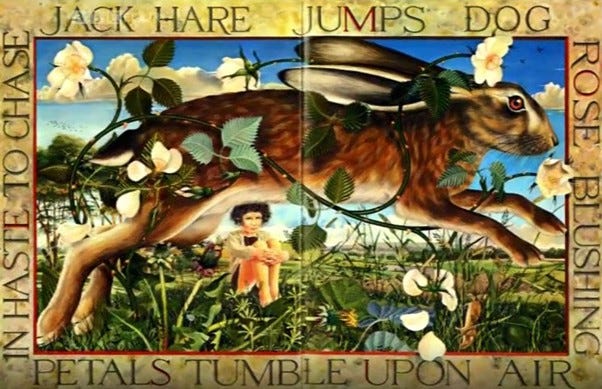
The reason this book, and these clues captured and held the imagination of a generation was that if you sequentially solved the clues, there was a REAL treasure buried somewhere in England. This treasure was shown on the back cover in a photo snapped surrounded by a little soil and leaves (what kind of leaves? Did they help pinpoint anything about the location? Nope. I don’t think so, but even now I remember wondering if that photo gave a clue of vegetation that noone else had tried to solve).
The end prize causing the fervour was a solid 22 carat gold hare, encrusted with precious and semi-precious jewels (as seen in the image above). Kit Williams, the artist and dreamer-upper of this magical book had buried the hare deep in the English countryside, in the dark of night, with Bamber Gascoigne, would you believe? (Brits know Bamber, the crazy-haired, bespectacled ‘University Challenge’ host).
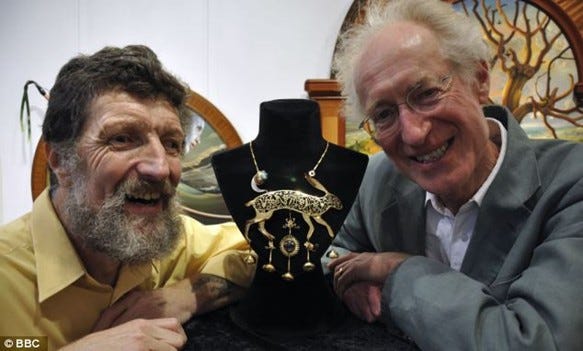
Our hare - our national treasure - lay hidden for almost three years as, in a frenzy, ordinary folk everywhere joined in the World’s biggest collective treasure hunt.
Metal detectors were all the rage, yet the hare had allegedly been buried at a depth beyond metal detectors - or so Kit thought.
The real denouement to this story runs something like this: Kit broke up with his girlfriend and she knew, roughly, where the hare was buried. She told someone in a fit of pique post breakup, and this bloke, metal detector or shovel in hand, went to the approximated spot and started to dig. He claimed the treasure, and pipped two Physics teachers from Manchester to the post, who had solved the riddles properly and were but days from pinpointing the hare’s exact location.
I really feel for them, even forty years on.
I also feel for Kit; after three years of no one solving it, the discovery through betrayal made him a recluse.
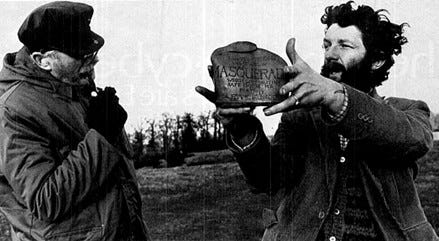
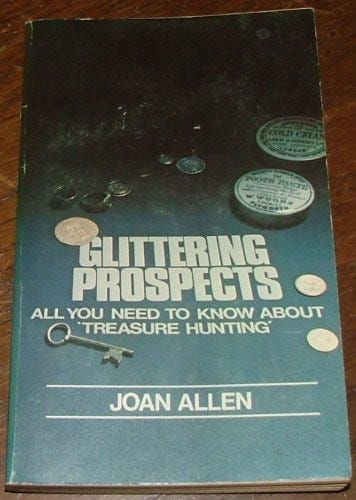
The clay casket was intended to surround the metal object to thwart metal detectors, which were all the rage. They were such a ‘rage’ that in 1975, my Father has ghost written a book on metal detecting called ‘Glittering Prospects’:
Fast forward to 2015, and it’s the Sydney Festival, which takes place every January.The worldwide premiere of Masquerade, the play based on the book, is taking place at the Opera House as part of our Sydney festival. We attend the opening night, tickets bought excitedly (by me) as a family Christmas treat.
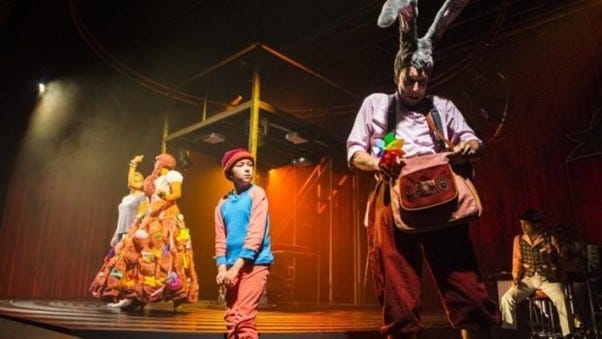
In the front row, a few rows in front of my parents, the Hubster and our kids- sits a lady in her 40s with her son and her childhood copy of the book - which now trades briskly on eBay (a limited and signed edition of 1000 for USD750). It is a collector’s item in its own right, yet means next to nothing unless you lived through the hare hunt.
Seeing the book back then for the first time in thirty years took me, in one second, back to the excitement of childhood. The book cover; the supremely detailed book art; the complex clues; the mass hysteria, the kids at school saying:
‘it’s a secret, I DO know the answer to most of the Masquerade riddles but my Dad/Mum/brother told me not to say…
‘What? You’re stuck on THAT clue? But that’s, like, sooooooo easy. We solved that clue months ago’
When I saw that cover, WHOOSH - all of these images and conversations flooded back like pieces from a jigsaw puzzle in my mind.
I read in the play’s leaflet about the fate of the golden hare. The original owner went bankrupt and auctioned the hare off in 1988. It was bought by a middle Eastern jewellery collector. She had no idea of the story behind the piece until many years later. One of her family would dig the hare out of of the vault, and wear in for Christmas Day dinner. Kit Williams was only reunited with the hare when it went on display at the V&A Museum in London; he hadn’t laid eyes on his handmade terasure in decades.
Paspaley Pearls in Sydney sponsored the one-off piece of jewellery to come to Sydney and be exhibited in their flagship store to coincide with the worldwide premiere of the play back in 2015. I told the kids: ‘we’re off to see the hare this weekend.’ They were….a little ‘whelmed’, if truth be told .
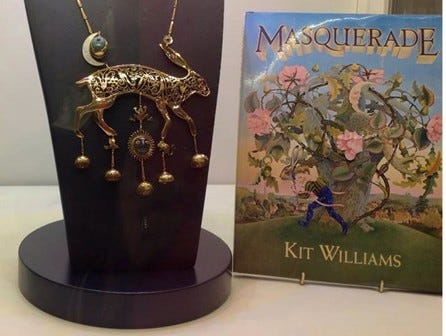
It’s pretty tricky for modern kids living in an on-demand, instant gratification world to understand people sitting around for hours, week after week, year after year, trying to work this book out, without getting bored or moving onto something else. I guess as a generation, we kids had more stickability - and far, far fewer shiny distractions
‘Couldn’t you just Google the clues or do Olden Days Google to do it quicker?’asked Master 7.
‘ Nope. That was life in the times B.G., son - those halcyon days Before Google’
…..to which he looked perplexed and googly-eyed; there existed such a time as life B.G.?
Now imagine this conversation just 11 years later, in the times of AI; such a publishing feat is impossible now, as AI would solve it for us.
The kids’ ambivalent attitude to the hare persisted until they had seen the play - and until they stood in front of the display case, and ooh’ed and aah’ed at the detailed beauty of it. I suspect a visit to Paspaley at such a young age gave my daughter, and her friend, a taste for fine jewellery, too, so well done Paspaley! As long as there are oysters bestowing pearls, you’ll have Gen Next Customers.
It took my breath away, momentarily when I first laid eyes on it. All those hours thinking and daydreaming about that elusive, bejwelled hare, buried at the end of a country-sized treasure hunt and here it was, right under my nose.
My Dad always wrote rhyming treasure hunts for our birthdays and hid each present along the route. Maybe that makes the book doubly magical; show me the kid who doesn’t love a treasure hunt.
Our kids, when they had parties, we ‘kidult’ parents hid all the party favours at the end, and the kids had to hunt for them. Some 15 years later, I’ll meet a grown-up friend of our eldest who’ll say
‘I always remember ________’s parties; you always did such imaginative things.
Thanks to Masquerade
Thanks to my upbringing, where riddles and words and puzzles were lifeblood.
As I pondered Masquerade, I thought long and hard:
1. which brand has capture my imagination in that same way since then? (None. It’s a very tall order. it was three years from the book coming out to the hare being found, and we dipped in and out of it - but it held our attention for a good chunk of time)
2. what lessons could we learn from Masquerade to capture our audience’s imagination as a brand in today’s frenzied and frenetic fast-paced world?
#1 we are missing the magic; we are lacking in imagination
You had to be there to understand the magic of the golden hare; you had to live it. I cannot capture, when I describe to my kids, the excitement if you were around in the UK back then, but believe me, it was an awesome collective experience to live through it with family, friends and neighbours. It was, for a while, the enigma wrapped in a riddle that just bugs the heck out of people until someone solves it. Business and brands and success and mastery of marketplace is all about riddle, puzzle and problem solving - and Masquerade is a personal pinnacle example of that, for me.
#2 we are lacking in brand / business bravery
The publishers of Kit Williams stumped up the moolah to pay for the bejewelled hare, then valued at GBP3000. Today, its estimated value is GBP250 000. It was such a novel idea, something noone had ever thought of before. Erase the story from your mind, and try and imagine if you were approached with something equivalent - that had never been done - by a likely quirky artsy type, would you honestly readily leap at the chance to ‘just do it’? If I was approached on a brand, big or small, and I felt that tingle of childlike excitement, my heart would lead head and I’d jump in with both feet, if it gave me the same feeling I’m getting now thirty plus years on, just thinking of that damned trickster hare!
#3 We’re on a Groundhog Day hamster wheel
Much of what brands, and business, does is same-same, over and over. The years roll by, we anniversarise launches, but the promotional mechanics are fairly predictable, so much so our customers know when we’ll discount and have established a pattern of buying behaviour to assume, and wait for, or seek out, the discount. Selling at RRP is almost a notional ideal in our always-on deep discount wars of 2026.
Imagine it’s Monday morning and you have an exec team meeting, or you have an away day with your team to do the same thing you usually do as these away days: plan or review the annual/quarterly strategy. So far, so samey.
Imagine a bearded artist knocks on your BoredRoom door (no…imagine he cartwheels in, or pops out, gnomelike, from behind the BoardRoom whiteboard). Perhaps imagine our artist pulls away your innovation day beanbag from under you and says - or maybe sings:
‘HEY! WAKE UP FROM YOUR TORPOR! it’s time to find your golden hare’.
(Note, Kit Williams would be unlikely to do this. He is a bona fide shy and retiring artist, but this is my story to shake some excitement into the same-same day you might be about to face)
Now, you’ve been woken from your BoredRoom slumber: would you devote a day - a half day - to letting your team have the freedom to invent and imagine something that your eight, eighteen or eighty year old customer could get REALLY excited about? A new product? A new service? A new category-breaking promotion that is big and bold and brave and EXCITING?
I hope so, I really do. I have the urge to do that wake-up call often, but rare is the time a client wants to ‘risk’ thinking that big. It’s just not the done thing; it’s a bit scary, a bit crazy, it’s not safe and cosy and familiar - which is exactly why it should and must be done. Why not risk 5% of a budget on something extraordinary, and let the 95% sit in more ordinary territory?
more play, everyday
in our workplaces and spaces
-However serious (- or seriously dull?) - the industry or category we work in, it matters not. We need to have more fun, but I caveat that, always with this: I mean PRODUCTIVE fun with an end result that is actionable, and executable, even if we have to rein back the original golden hare idea to something more palatable to the person who signs off the budgets and demands ROI metrics (dashboards that make you want to lose the will to live)
If you don’t routinely work with kids, or animals, I’d urge you to do more of it. I’m serious, I might sound stark raving MAD - thank you, yes I am M.A.D. enough to want to Make A Difference - because I know that an utterly fresh perspective can take you to places unimagined - where you won’t find all your competitors.
If you can’t get inspired by real kids or animals in the workplace (and my then-six year old once out-thought a C-suite of executives in a business challenge) – then may I suggest, as an alternative, that you just work with an unreal animal instead?
As your inspiration, why not print out the Masquerade golden hare, and stick it somewhere where you can see it?
Every. single. day.
If you must be covert, tuck it inside your meeting notebook*, like a talisman of the brave and a reminder to take your thinking to new and exciting places.
*By the by, notebooks are where it is at for our brains ; for remembering more, and thinking more freely, and making connections that are higher order versus online note taking. Brain science proves that.
Happy hunting for YOUR personal golden hare; may following their trail excite and delight you everyday through 2026!
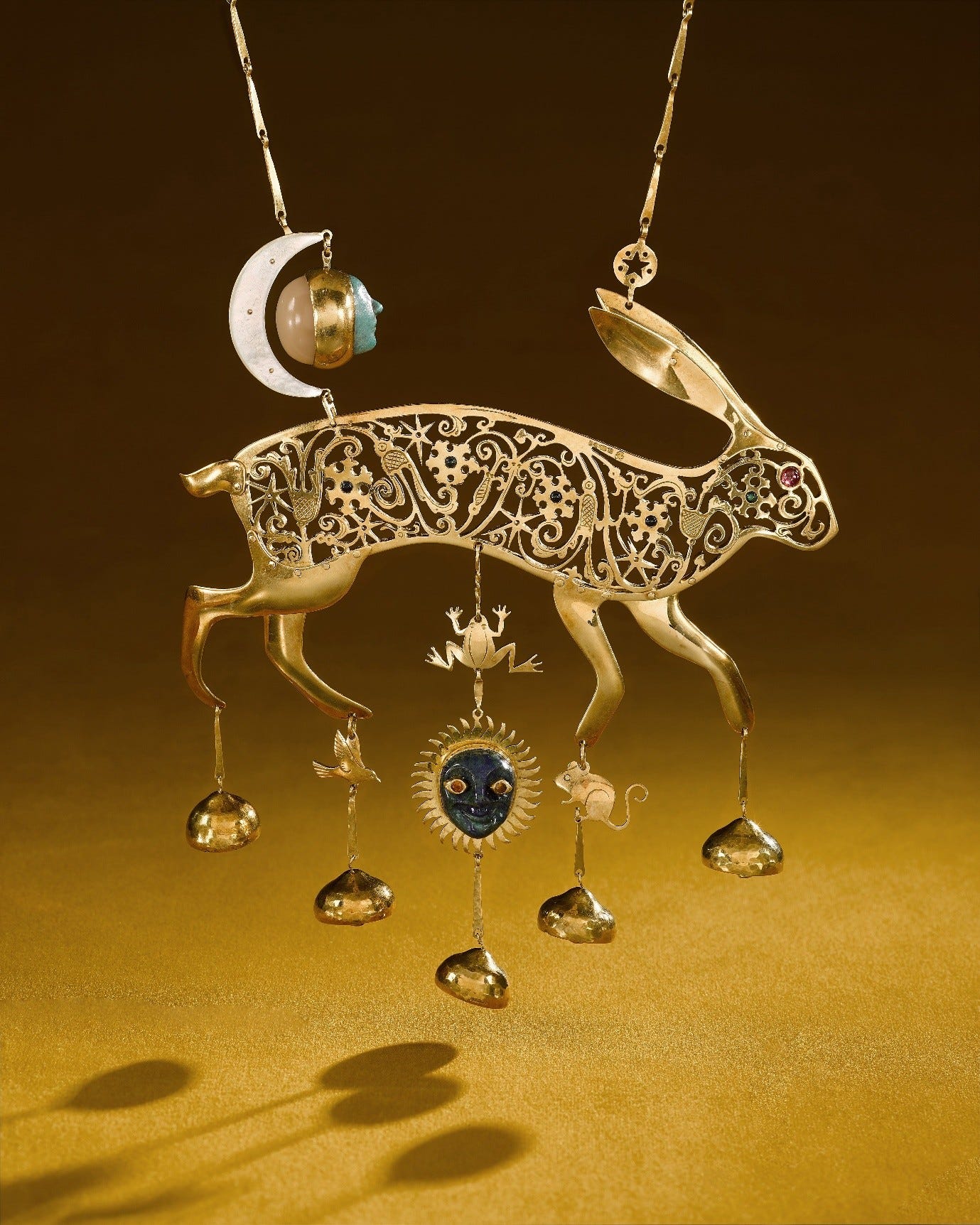
The Masquerade gold hare was put up for auction at Sotheby’s in November 2025. Here endeth my fantasy of tracking down the Asian dwelling byer and knocking on her door on Christmas Day so I might just see that hare
The guide price was only £15000-20000 (it was valued at £5000 in 1979 when the book launched, so that amount seemed so trivial a valuation).
The hammer dropped at £82550.
To me? It’s priceless; the talisman I visualise to always take things further than the obvious.
And it’s a reminder about togetherness; about a family sat in the warmth of a kitchen, solving tricky puzzles.
And that feeling? That’s the one we should be on a harebrained search in life - as in work.